QR vs NFC for product passports: an honest comparison
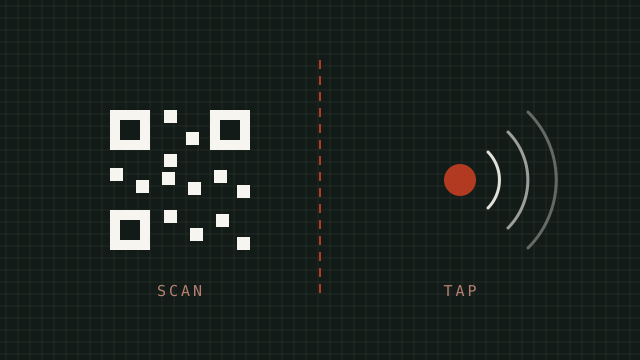
Every product passport needs a data carrier — the physical thing on the product that opens the digital record. In practice the choice is between a QR code and an NFC tag, and vendors on each side tend to oversell their favourite. Here is the comparison we give our own customers, trade-offs included.
The short answer
- Woven QR is the right default for most apparel: lowest cost, universally scannable, and — when textile rather than paper printed — durable for the life of the garment.
- NFC earns its premium on flagship and accessory lines: a tap is a nicer moment than a scan, it works where a camera struggles, and it unlocks cryptographic anti-counterfeit features QR cannot match.
- Many programmes sensibly use both: NFC for the experience, a textile QR as the visual, no-hardware fallback.
Cost
A textile QR label adds little over the label you were producing anyway — the code is part of the textile. An NFC label carries a chip and antenna, so expect roughly two to four times the per-unit cost of a textile QR, depending on volume and construction. At tens of thousands of units, that difference is a real line item; decide based on what the tap is worth on that specific product.
Durability
This is where construction matters more than technology.
- A printed QR — on a sticker, hangtag or paper label — fades and abrades. Hangtags are cut off before first wear; printed on paper or film often becomes unscannable within a season of washing.
- A woven QR on textile. The modules are the fabric. Properly constructed and wash-tested, it stays scannable for the practical life of the garment.
- An NFC inlay is electronics inside a textile: done well (sealed, strain-relieved, placed away from high-stress seams), it survives normal washing; done carelessly, it dies early. Ask any NFC vendor how they wash-test — if the answer is vague, keep shopping.
User experience
- QR: everyone understands it, every modern phone camera reads it, and it works at a distance (a wholesale buyer can scan a rack). The cost: the customer has to see it, open a camera, and aim.
- NFC: one tap with the phone, no camera, no aiming — it feels like the product responding to touch. The cost: the customer has to know the tap is possible, which is why NFC products usually carry a small printed prompt anyway.
For accessibility, note that a tap can be easier than framing a small code for users with low vision or limited dexterity — another quiet argument for NFC on the lines where it fits.
Security and anti-counterfeiting
A QR code is public information: anyone can photograph and reprint it. That is fine for care data and storytelling; it is weak for authentication.
Modern NFC chips can do better: cryptographically signed responses that change with every tap, so a cloned tag fails verification. If counterfeits cost you real revenue or reputation, this is the feature that decides the question — and it is only available on the NFC side.
Regulation-proofing
The EU’s Digital Product Passport rules describe data carriers in technology-neutral terms — QR codes and NFC are both expected to qualify, and final specifics arrive with the delegated acts. The safe move is not picking the “winning” technology; it is making sure the carrier holds a persistent unique identifier and physically survives the product’s life. A dead tag is non-compliant in every scenario.
A rule of thumb to steal
| Product | Carrier |
|---|---|
| Core apparel line | Textile QR |
| Premium / flagship pieces | NFC (+ textile QR fallback) |
| Leather goods & accessories | NFC |
| Anything counterfeited | Cryptographic NFC |
| Workwear / rental textiles | Textile QR, industrial-wash spec |
If you are still unsure, order samples of both, put them through your actual wash spec, and hand them to five real customers. The right answer is usually obvious within a week.